

Guillermo del Toro likes himself a good old monster, doesn’t he? Whether kaijus, Hellboys, vampires, fauns, or fish men – GDT is a self-confessed monster nut and it’s through this intense passion, together with his innate ability to find the humanity within all of them, that the director has managed to birth some of his finest creations.
With a heart and a soul that belies his monstrous appearance, del Toro has nailed it once again with his own inimitable spin on Victor Frankenstein’s iconic creation, one that takes Mary Shelley’s beloved story and makes it entirely his own.
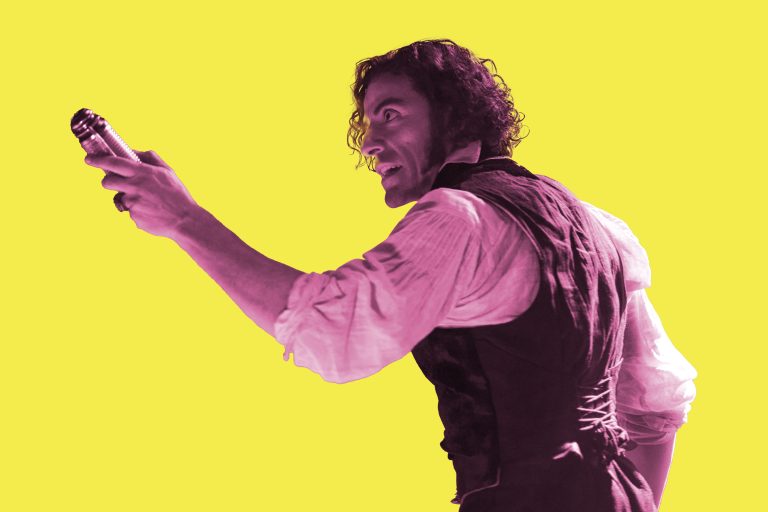
Driven by grief and obsession, scientist Victor Frankenstein (Oscar Isaac) defies nature by creating life from death, only to eventually abandon his sentient creation (Jacob Elordi), a being cursed with both innocence and anguish. As the Creature searches for meaning and love in a world that rejects him, both maker and made are drawn into a tragic confrontation that questions who the real monster truly is.
While Frankenstein purists will undoubtedly baulk at the way Guillermo del Toro has gone about applying his own twists to Mary Shelley’s legendary novel, at this point, we’re so familiar and so comfortable with the original story that it’s hard to argue that an alternative take isn’t precisely what we need. And come on guys, this is Guillermo del Toro here. If he’s managed to convince Netflix to part with large wads of cash to indulge his grand monster vision – one he’s clearly been dreaming of for quite some time – who the hell are we to disagree?
Although he’s come awfully close to taking on a classic monster in the past (the similarities between The Shape of Water and Creature from the Black Lagoon are there for all to see), this is really the first time the director has had his big shot at one, and you can just tell he’s having a whale of a time with it all. A dark, morbid whale of a time, sure, but a whale of a time, nonetheless.
Clearly revelling in the challenge of giving us his personal, full-blooded version of Frankenstein, del Toro throws everything he’s got at this film and the results prove that the director still has what it takes to deliver monstrous thrills, gothic spectacle, and fantastically soulful storytelling unlike anyone else in the game. Big, bold, beautifully bleak visuals backdrop what is a story of grand gothic ambition that looks to dial up the scale and scope of the source material, all while imbuing it with heart, humanity, and a surprising amount of hope.
As with so many of del Toro’s previous films, Frankenstein deals in big ideas and bold, fantastical concepts, yet it’s always done with one eye on the emotional, deeply human core of it all. There are plenty of filmmakers out there that have taken a stab at the Frankenstein story, and plenty more that would love to, yet few have succeeded in taking that tale and balancing its themes, its soul, and its horror elements quite as well as Guillermo del Toro has done here.
It’s far too long and plagued with plotting issues to be considered among his greatest work, however, witnessing Guillermo del Toro in full Frankenstein flow is truly a sight to behold. And while plenty of big name auteur directors have taken Netflix’s money and ploughed it into borderline unwatchable passion projects, del Toro does precisely what any great filmmaker should do in such a situation and make the best movie they possibly can with the unlimited resources afforded to them.
Enriched with the kind of unique storytelling soul that only Guillermo del Toro can offer, Frankenstein is grand gothic dramatics and operatic action with undeniable substance. It’s also the kind of thematically rich tale of death, paternal failures, forgiveness, abandonment, and prejudice that all monster flicks should aspire to; and while of course it already has the natural depth of Mary Shelley’s novel to fall back on, del Toro’s Frankenstein makes the bold decision to go its own way with certain story and character elements, reaping the rewards as it goes.
While one or two of the alterations to the source material don’t quite click, the vast majority do, ensuring that the film stands on its own two feet, all while adding just the right level of depth and nuance to the story. Of these alterations, perhaps the biggest and most impactful in this regard are the tweaks made to the Creature’s side of things, as Jacob Elordi’s iconic character is given more depth and sympathy from the script than he ever had before.
Again, such fundamental alterations to the original will inevitably upset some, however, their impact here cannot be denied. Backed up by a brawny and phenomenally committed performance from Jacob Elordi, the Creature’s side of the tragic tale is sympathetic and affecting in such a way that it adds a satisfying level of shade to the character while being wise enough to never undermine or mess with the novel’s themes.
The result is a heady, horrific, emotionally satisfying blend of Guillermo del Toro’s own unique style, storytelling, and boundless gothic imagination and a clear, admirable reverence to the novel. Like every iteration of the Frankenstein story for either stage or screen, it also acts as the perfect platform for its stars to show their chops.
As mentioned, Jacob Elordi’s performance is Frankenstein’s true standout, as he uses his towering presence and natural allure to positively dominate the screen yet balances it all with a beautiful sense of heart, as the Creature gradually evolves both physically and emotionally throughout the story. Caked head to toe in prosthetics, plenty of actors would find themselves withering behind it all, however, Elordi uses it to his advantage as he completely disappears into the tragic character, and while he must wait until deep into the film for the Creature to make his first proper appearance, he makes the most of every minute of screen time to deliver the finest performance to date of his relatively short career.
With Oscar Isaac doing Oscar Isaac things (always a compliment) opposite him, Elordi crushes it (quite literally at times), utilising his undoubted natural skills as a performer and his chemistry alongside his seasoned co-star to prove that he has all the attributes needed to make it to the very top of the game.
As key cogs in a very smart ensemble that includes the likes of Mia Goth, Charles Dance, and Christoph Waltz, Isaac and Elordi deliver Guillermo del Toro’s vision to perfection. Full of deliciously operatic theatrics and gorgeous gothic gravitas, yet never afraid to wind it in and get to the very heart of the story’s pain and tragedy, the pair are everything you want from Victor Frankenstein and his grisly creation, delivering the kind of monster flick to be aspired to.
Beautifully bold gothic visuals, grand storytelling, and enriched with undeniable heart, soul and humanity, Frankenstein is a superior monster flick and one of its director’s finest efforts. While it’s far too long and Frankenstein purists will inevitably baulk at the brash twists on the original tale, Guillermo del Toro succeeds in delivering his own unique spin on the legendary story, offering something highly emotive, thematically rich, and immensely immersive in the process.
This article first appeared in Late Nite Picture Show #1


