
Few contemporary filmmakers command the level of reverence afforded to Paul Thomas Anderson. Over the past three decades, he has built one of the most ambitious and unpredictable filmographies in modern American cinema. While many directors are defined by a recognisable auteur signature, returning to familiar genres, themes, and collaborators, Anderson thrives on reinvention. Though he has frequently worked with actors such as Daniel Day-Lewis, Joaquin Phoenix, and the late Philip Seymour Hoffman, each film feels wholly singular, refusing to echo what came before. With fourteen Academy Award nominations to his name, three more added at the 2026 Oscars, the lingering question remains: will this finally be the year Anderson takes home his long-overdue win?
Anderson announced himself as a director to watch with Hard Eight (1996), a lean, character-driven debut that premiered at Sundance before screening in Cannes’ Un Certain Regard section. Starring Philip Baker Hall as Sydney, a seasoned gambler who mentors a troubled young man played by John C. Reilly, the film quietly introduced Anderson’s fascination with moral ambiguity, surrogate families, and deeply flawed men searching for connection. Modest in scale, Hard Eight nonetheless revealed a filmmaker with striking confidence and control.
That confidence erupted into full view with Boogie Nights (1997), the film that cemented Anderson’s reputation. Set in the San Fernando Valley, it charts the meteoric rise and devastating fall of a young nightclub dishwasher who becomes a porn star during the industry’s 1970s boom before spiralling amid the excesses of the 1980s. Bursting with kinetic energy and an unforgettable ensemble cast, the film earned Academy Award nominations for Julianne Moore and Burt Reynolds, as well as Anderson’s first Best Director nod. Originally written with Leonardo DiCaprio in mind, the lead role ultimately went to Mark Wahlberg, a casting choice that proved iconic.
In Magnolia (1999), Anderson pushed his ambition further, crafting a sprawling mosaic of interconnected lives grappling with regret, forgiveness, and coincidence in the San Fernando Valley. Its audacity divided audiences but earned three Academy Award nominations, including Best Original Screenplay, and cemented Anderson as a filmmaker unafraid of emotional and structural excess.
Anderson pivoted sharply with Punch-Drunk Love (2002), casting Adam Sandler against type in one of his most unexpected performances. The film follows Barry Egan, a socially isolated man whose attempt to escape loneliness through a phone-sex line spirals into danger, even as he begins a tentative romance. Though overlooked during awards season, it has since become a cult favourite, celebrated for its off-kilter romance and raw emotional honesty.
A defining turning point arrived with There Will Be Blood (2007), Anderson’s first collaboration with Daniel Day-Lewis and composer Jonny Greenwood. An epic portrait of greed and ambition, the film follows oil baron Daniel Plainview as he claws his way to power during California’s oil boom. The film earned eight Academy Award nominations, winning two, including Best Actor for Day-Lewis—and is widely regarded as Anderson’s masterpiece.
He continued exploring fractured masculinity in The Master (2012), centred on a troubled naval veteran drawn to a charismatic and manipulative cult leader. Anchored by towering performances from Philip Seymour Hoffman, Joaquin Phoenix, and Amy Adams, the film earned three Oscar nominations, all for acting.
With Inherent Vice (2014), Anderson embraced noir through a psychedelic haze. Set in drug-soaked 1970s Los Angeles, the film follows private investigator Larry “Doc” Sportello as he navigates paranoia, lost love, and a fading counterculture. Deliberately loose and melancholic, the film earned two Academy Award nominations and has grown in stature over time.
Phantom Thread (2017) marked Anderson’s final collaboration with Daniel Day-Lewis. Set in 1950s London, it follows Reynolds Woodcock, a meticulous fashion designer whose controlled world is unsettled by Alma, his muse and lover. Elegant, unsettling, and darkly romantic, the film won the Oscar for Best Costume Design and earned six nominations—the most of Anderson’s career.
Anderson shifted gears again with Licorice Pizza (2021), a sun-drenched coming-of-age story set in 1973. Starring Alana Haim and Cooper Hoffman, the film captured youthful restlessness and romantic ambiguity with an effortless charm, earning three Oscar nominations, all for Anderson.
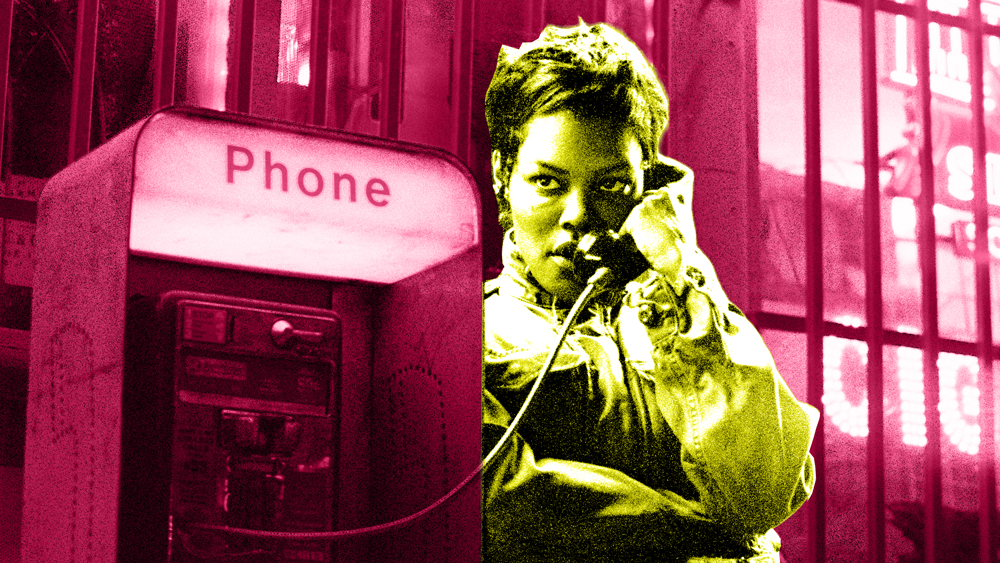
Now, with One Battle After Another (2025), Anderson may finally be on the brink of overdue recognition. The film follows a group of former revolutionaries forced to reunite when a long-dormant enemy resurfaces, boasting a stacked cast including Leonardo DiCaprio, Benicio del Toro, Sean Penn, Regina Hall, Teyana Taylor, and newcomer Chase Infiniti. With a career-high 94% Rotten Tomatoes score and thirteen Academy Award nominations, including three for Anderson, it has dominated awards season. After decades of near-misses, the question feels unavoidable: is this finally Paul Thomas Anderson’s moment? We’ll find out on March 15.