
Professionally written subtitles are a complex jigsaw puzzle of translation, timing and truth.
Physical 100
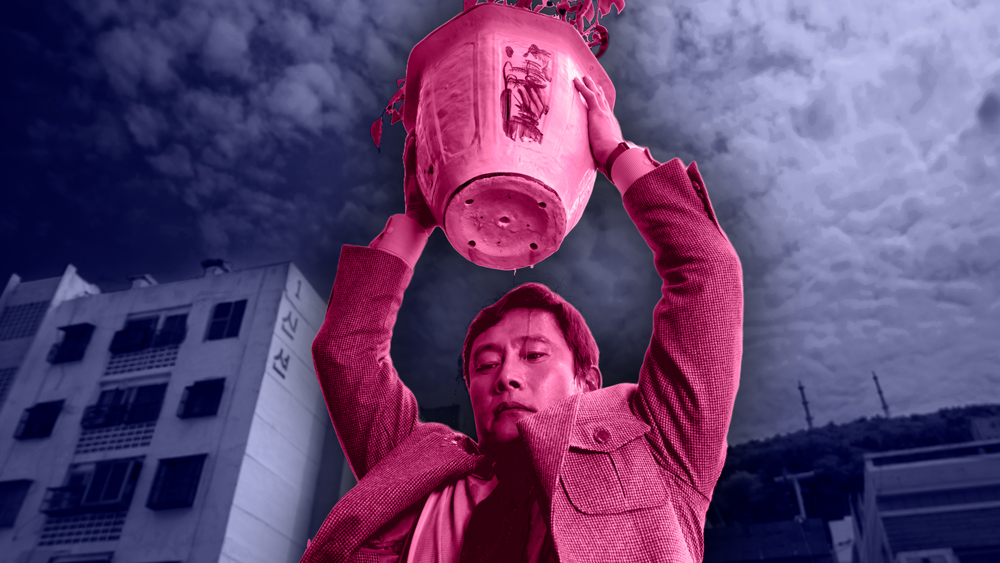
Having run out of amusing life updates to feed the chatty, trivial kind of conversation you can only have with your hairdresser, I asked her if she had seen the South Korean Netflix show Physical 100, where professional athletes compete in a series of gruelling challenges to be the only one left standing. She confessed she had, but only for ten minutes. She had abandoned the show because it needed subtitles.
While the majority of Physical 100’s audio is the universal language of strained grunts and squawks, an aversion to subtitles indiscriminately dismisses film and TV from over 80% of the world. Yet foreign film is increasingly accessible in the UK – over the next few months alone, cinemas will be showing Park Chan Wook’s No Other Choice, Hasan Hadi’s The President’s Cake, Oliver Laxe’s Sirat, Richard Linklater’s Nouvelle Vague and Paolo Sorrentino’s La Grazia. It’s a widely known fact – bordering on a joke – that English-language audiences would experience so many more undoubtedly excellent films if they would only read those pesky subtitles.
The Academy Awards
In fact, foreign language films are increasingly difficult to avoid, particularly for cinephiles looking to keep up with awards season contenders. Bong Joon Ho’s Best Picture win at the 92nd Academy Awards with Parasite is largely credited as having ushered in a new era of acceptance for international cinema and fast forward to the present, it’s now normal to see not one, but two international features nominated for Best Picture. 2023 saw both Anatomy of a Fall and The Zone of Interest, while 2024 had both Emilia Perez and I’m Still Here. This year, every single Oscar category included at least one international title, with Sentimental Value and The Secret Agent winning a fierce five-way fight (with It Was Just an Accident, Sirat and The Voice of Hind Rajab) for a Best Picture nomination.
By no means a voting Academy member but a bona fide subtitle-user, I was similarly shocked to find that my 25-year-old sister preferred to watch everything (including English language films and shows) with the subtitles on, a case study consistent with research commissioned by the National Deaf Access Charity in 2023, which showed that of those who use subtitles in their native language, the majority were under the age of 25. “Concentration” was cited as the main reason for Gen Z’s compulsory captioning (insert here a diatribe on how social media – particularly short form video – is ruining our ability to concentrate), whereas a 2025 survey from The Associated Press found that those 60 and older were “especially likely” to say they “never” use subtitles, heralding a great subtitle-gate generational divide.
It’s one thing using subtitles to focus your native language, but interlingual subtitles bear the burden of accuracy in translation. It’s not unusual to hear two or three sentences at a time where the subtitles include only four or five words, and wonder whether the nuance, feeling and intensity of the original script are being conveyed accurately. An ongoing battle, the need to fit reading speeds and display constraints mean subtitles are often forced to diverge from exact speech content. In other words, subtitles need to be on screen long enough for the average person to read them but also be displayed at the time they are said to avoid rendering actors’ performances meaningless. A research article in the Journal of Audiovisual Translation found that while professional subtitling values accuracy, in practice, quality requirements differ by broadcast or streamer. Netflix, for example, has a minimum duration of 0.83 seconds per subtitle and a maximum duration of seven seconds, with a maximum of two lines of text allowed on screen at any one time.
Given these constraints, professionally written subtitles are a complex jigsaw puzzle of translation, timing and truth. The accepted approach prioritises meaning over word for word translation, which accounts for timing constraints, as well as culturally specific idioms that lose their accuracy in literal translations (like ‘break a leg’ or ‘piece of cake’). Yet, whether it’s possible for subtitles to be perfectly accurate or not, being a subtitle-purist feels unfair to those little bits of text that bear the weight of the (non-English speaking) world. Currently, the only alternative is to learn a language fluently. That leaves a few weeks to learn Arabic for The President’s Cake, Spanish, French and Arabic for Sirat, French for Nouvelle Vague and Italian for La Grazia. Or there’s the option of not watching at all. I know which I’d prefer.