

Sickness reared its itchy, swollen head in three of this year’s Cannes Film Festival premieres, all featuring some kind of plague – Diego Céspedes’ The Mysterious Gaze of the Flamingo (which won the Un Certain Regard Award), Julia Ducournau’s Alpha and Charlie Polinger’s titular The Plague – yet none of these films intend to show the actual ordeal of sickness. Instead, they use physical symptoms to differentiate characters on screen. Disease becomes a metaphor for those who are unconventional, rejected by society and ostracised for their lifestyles, beliefs or ideals. In a society obsessed with infection, it’s the contagious nature of ideas that threatens the whole.
In The Mysterious Gaze of the Flamingo, a queer community faces accusations of murder as men are struck down by an invisible ‘plague’, said to be transmitted through eye contact. “I got lost in your mysterious gaze,” Flamingo’s (Matías Catalán) former lover Yovani (Pedro Muñoz) tells them, as it emerges that this mystical sickness is AIDs, on the eve of a worldwide pandemic. What Céspedes confirms in The Mysterious Gaze, Julia Ducournau leaves ambiguous in Alpha, where a bloodborne virus slowly turns flesh to marble. Hospitals are overrun yet staff walk out, refusing to treat patients due to their own fear of infection. A decade later, after a not-so-sanitary encounter with a needle, the possibility that Alpha (Mélissa Boros) is infected triggers difficult memories of loss for her and her mother (Golshifteh Farahani), as well as terror from her classmates.
Schoolchildren’s unmatched ability to bully and isolate each other – only exacerbated by physical signs of difference – is also at the centre of The Plague, where a shy and kind-hearted Ben (Everett Blunck) finds himself struggling to fit in at a summer water polo camp. “He’s got the plague!” ring the shouts of his peers, as they avoid the designated weird kid Eli (Kenny Rasmussen) as if, well, he’s got the plague. Except this time the kids may not be imagining. Eli does have an extensive and seemingly incurable rash – the contagiousness of which the film calls into question. Ben must decide whether to join the bullying or face the worst fate imaginable for a twelve-old-year old – being a social pariah.
All three films are tales of stigmatisation, from AIDS sufferers to sensitive 12-year-old boys. The blistering welts of The Plague serve the same function as the cracked, marble-white skin of Alpha and the phantom stare of The Mysterious Gaze. Sickness is used to explore how people act when threatened. “He’s a beast,” Mama Boa (Paula Dinamarca) says of Yovani, “full of fear and barely any love.”
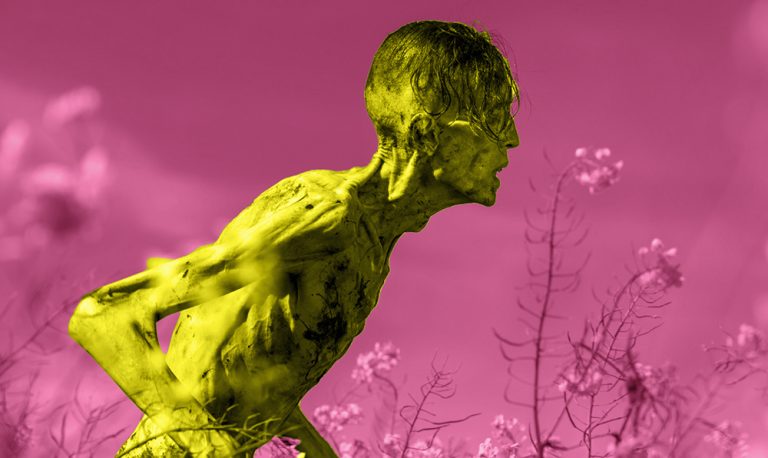
The worst of humanity’s decisions are also on display in the 28 Days Later (2002) series, revived this year with the return of Danny Boyle’s direction on 28 Years Later. The original film found acclaim for its naturalistic, no-frills representation of a zombie apocalypse (characterised best by its snub of the word zombie in favour of the ‘infected’) and can be seen as a struggle between morality and humanity’s baser instincts. Now 28 Years Later, the urge to segregate those perceived as ‘different’ is best shown by the fear and confusion Dr Kelson (Ralph Fiennes) faces, driven by his (admittedly crazy looking) efforts to coexist with the infected and treat them with respect in death. Kelson’s more considerate approach is incompatible with the Holy Island community’s survival instincts, which are driven by an ‘us or them’ mentality.
From Kelson’s outcast status to rashes, deadly gazes and skin turned to stone, sickness has become a symbol of screen for anyone that deviates from the social norm.